Virtual Fitting Rooms Explained: How to Try On Clothes Online with Confidence
Curious how to see how clothes look on you online? Dive into the world of virtual fitting rooms—learn how they work, what to expect, and how to get the best results.

Welcome to the Age of Virtual Fitting Rooms
Shopping for clothes online has never been more convenient, but the big question remains: How do you know if those clothes will actually suit you? Enter virtual try-on clothes technology—the digital dressing rooms that let you see how clothes look on you online before you hit buy. But how do these tools actually work, and which ones are worth your time?
Whether you're frustrated by clothing returns or just want to experiment with new styles fearlessly, understanding virtual fitting room technology can transform how you shop online. Let's explore how to unlock the full potential of these tools and make your next outfit purchase with total confidence.
What Are Virtual Try-On Clothes Tools and How Do They Work?
Virtual try-on clothes platforms use augmented reality (AR), artificial intelligence (AI), and 3D modeling to let you preview outfits on your own body—or a personalized avatar—before buying. These platforms scan or estimate your measurements, then render clothing digitally on your photo, video, or avatar.
- AR-based try-ons: Overlay digital clothes on your live camera image, similar to Instagram filters.
- Avatar-based try-ons: Create a 3D model of yourself using your body metrics, then "dress" your avatar in different styles.
- Photo-based visualization: Upload a photo and let the tool digitally fit clothes on your image for a realistic preview.
These technologies have rapidly improved. For example, Shopify reports that brands using AR-powered virtual fitting rooms have seen conversion rates jump by up to 250%.
How to Try On Clothes Online: Step-by-Step Guide
Getting started with virtual try-on clothes is easier than you might think. Here's a straightforward process to follow for the best results:
- Choose a reliable platform. Look for trusted virtual fitting room tools directly on brand sites or platforms like LetsGet.Style that aggregate multiple brands and technologies.
- Input your measurements accurately. Use a tape measure or the app's guided process to ensure height, chest, waist, and hip dimensions are as precise as possible.
- Upload a clear, well-lit photo (if required). Stand straight, avoid busy backgrounds, and wear fitted clothes for optimal avatar or photo-based results.
- Experiment with different styles. Virtually try on various sizes, colors, and combinations to see which looks best for your body and preferences.
- Use comparison features. Some tools allow you to save and compare different outfit images side by side, making decision-making more objective.
Comparing the Best Virtual Fitting Room Technologies
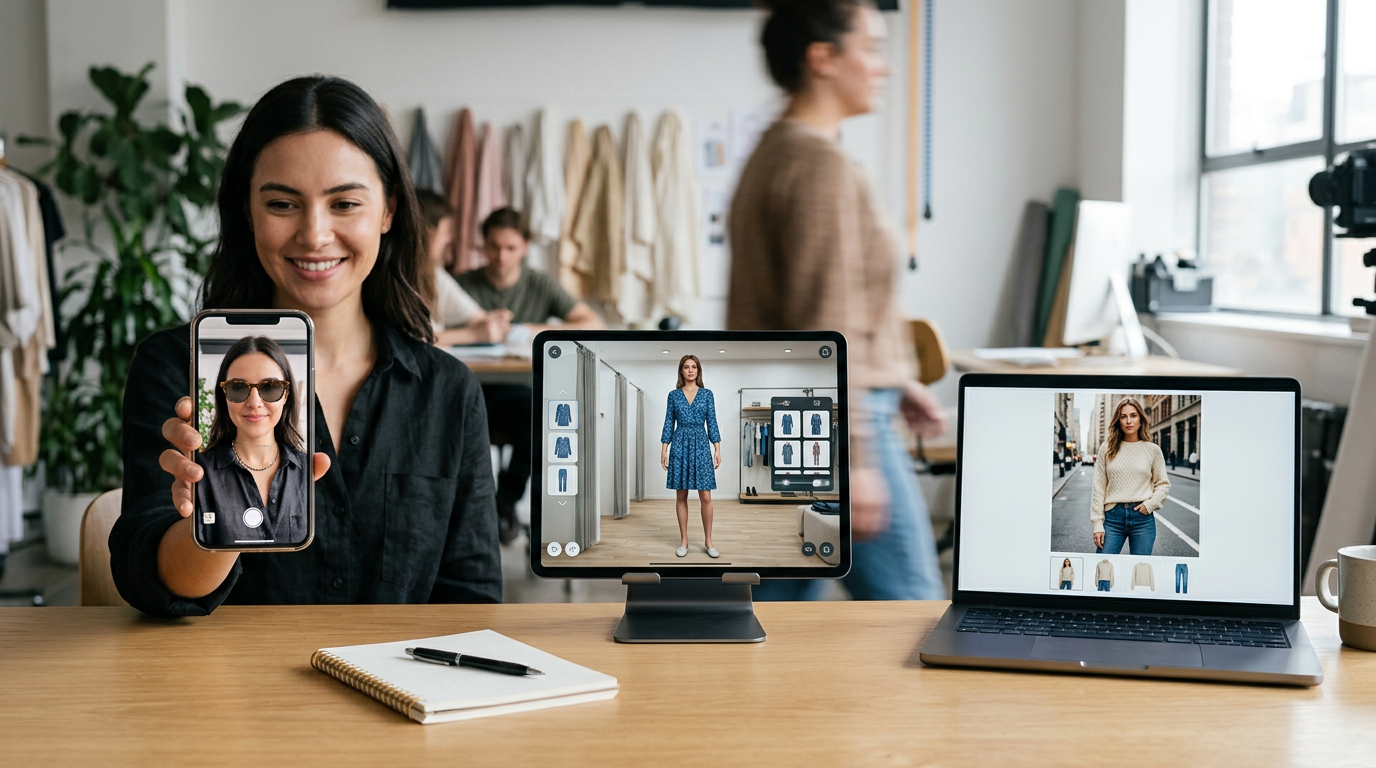
Virtual try-on tools come in different flavors, and not all are created equal. Below, we break down three of the best virtual try-on technology approaches:
- Webcam/AR overlays: Instant and interactive; works best for tops, dresses, and accessories. May be less precise for fit but excellent for style impressions.
- 3D avatar/smart sizing: Requires more setup but offers detailed fit simulation. Useful for shoppers who want to see full outfits and understand how fabric drapes on their specific proportions.
- Static photo visualization: Fast and accessible; just upload a selfie. While not as rich as 3D, it gives a quick sense of color and cut.
Some advanced solutions even blend these methods. For example, LetsGet.Style lets you compare various brands' fit and styling side-by-side, using both AR and smart avatar tech for a highly realistic preview experience.
Benefits of Using Virtual Fitting Rooms for Online Shopping
- Reduces guesswork: See how clothes look on you online, minimizing "unpleasant surprises" after delivery.
- Saves time and money: Fewer returns, less hassle repackaging and shipping items back.
- Discover new styles: Freely try bold looks or brands you might hesitate to test in-store.
- Improves accessibility: No need to visit physical stores—especially useful for those with mobility needs or busy schedules.
- Fun, personalized experience: Shopping becomes interactive and tailored to you, rather than generic size charts.
Tips for Getting the Most Accurate Virtual Try-On Results
- Provide up-to-date body measurements. Don't rely on old numbers—body shapes change, and accuracy matters.
- Use high-quality photos. If the tool asks for a photo, choose one with good lighting and a neutral background for true-to-life previews.
- Adjust for fit preferences. Some platforms let you specify if you prefer looser or more fitted cuts—use these options for a more personalized result.
- Try various brands and sizes. Not all brands size the same; use the comparison features of aggregated platforms like LetsGet.Style to see what works best.
- Check for movement simulation. Premium tools may simulate garment movement—watch for these details to judge comfort and fit.
Real-World Use: Case Study of a Virtual Fitting Room Shopper
Lisa, a remote worker in London, loves bold prints but often struggled with sizing when buying online. After using a virtual try-on fitting room with avatar tech, she found it much easier to choose the right size and color. "I used to return almost half my online purchases," Lisa says. "Now, with my digital avatar, returns are rare—and I feel more adventurous with new brands and cuts!" Her story is echoed by many, as retailers increasingly report fewer returns when customers use virtual try-ons.

What's Next? The Future of Virtual Try-On Clothes
Looking ahead, expect even more sophisticated virtual fitting room platforms. Key trends include:
- Real-time fit feedback: Soon, you'll get instant advice on whether an item will feel snug or loose—before your order ships.
- AI-powered style matching: Technology will suggest entire outfits or color palettes tailored to your body and tastes, not just single pieces.
- Social sharing and feedback: Share your virtual outfits with friends or stylists before making a purchase.
- Inclusivity advancements: More body shapes, sizes, and adaptive clothing options are coming to make virtual try-ons work for everyone.
If you want to explore the possibilities and find the best virtual try-on technology for your needs, consider starting with an all-in-one platform like LetsGet.Style. The latest innovations are making online shopping smarter, more personal, and—for the first time—almost as satisfying as the real fitting room.
FAQ
How do I try on clothes online before buying?
To try on clothes online, choose a virtual fitting room tool, enter your measurements or upload a photo, and use AR or 3D simulation to preview outfits. Many retailers and platforms offer easy step-by-step processes for seeing how clothes look on you online before you buy.
What is the best virtual try-on tool for outfits?
The best virtual try-on tool depends on your needs. Platforms using advanced avatar and AR technologies, such as those found on LetsGet.Style, let you compare brands, outfits, and sizes with highly realistic previews and personalized recommendations.
Compare virtual try-on vs in-store fitting rooms
Virtual try-on offers convenience, accessibility, and quick comparison of many styles from home, but may lack the tactile feel of fabrics. In-store fitting rooms provide real-world fit and texture but are less accessible and limit you to a store's stock.